AfricaFeatures Co.
We work with institutions, businesses and founders to develop the right recognition strategies and investment for better market positioning and understanding.
Explore an Opportunity →What we do
Being seen accurately is not the automatic consequence of doing good work. It is a separate discipline — and it is where most organisations lose competitive ground without knowing it.
Clients engage AFCo when they can tell something is not landing in their positioning but do not yet know what to do about it. We begin with a read — of the operation, the market, and the gaps between them — and design a positioning strategy that closes them. The instrument that carries it may be audio-visual content, a publication, a narrative, or a system.
The practice is designed to close two gaps
For operators in competitive sectors, Re:Cognition enables selection. A guest, tenant, buyer or investor chooses one option over another based on perception and understanding, often before contact is ever made.
For institutions, recognition decides standing. Mandate, continuity and the success of authority are hinged on being understood by constituents, funders and successors.
How AFCo works
AFCo Signals tracks what is changing — markets, opportunities, gaps, people, projects and emerging movements across Africa.
Partner Studio translates expertise and potential into clear positioning, credible narratives, reputation architecture and growth opportunities.
AFCo identifies and facilitates relationships among businesses, founders, institutions, investors, operators, creatives and markets.
Presence provides trusted representation, coordination, verification and on-ground execution where market entry or activation requires it.
Where we work
Hotels, restaurants, lounges, venues and operators where the market chooses based on perception and understanding.
Assets and asset developers, agents and holders competing for capital, tenants and buyers in a market where comparison is high and trust is low.
Government and non-government institutions in education, tradition, culture and public good, with mandates that require impactful transmission and delivery.
AFCo Signals
A continuous review of public reports across key sectors of interest — a periodic publication that spots patterns and gaps for recognition, trust, opportunity and positioning.
Open AFCo Signals →AfricaFeatures Co.
AfricaFeatures Co. is an opportunity platform with advisory, media and execution capabilities. We help founders, businesses, institutions, and place-based initiatives identify and close the gap between their actual value and the opportunities available to them.
Most organisations do not suffer from a capability problem. They suffer from a recognition problem. Missed opportunities are rarely the result of poor execution — they are almost always the result of gaps in how an organisation is perceived, understood, and trusted by the people whose decisions matter most.
Through Partner Studio and Frontline Diagnostics, we help leaders understand how they are perceived, where opportunities are being lost, and what must change to unlock growth.
The Founder
Olufela has spent over a decade working across business, media, culture, hospitality, development, and institutional strategy — building the applied depth that Partner Studio draws from. He is the founder of EyeCandy.Africa, a specialist production and brand intelligence practice, and has led engagements across nine Nigerian states, Kenya, and South Africa.
His instinct — named ‘See Difference’ (See Thee Far Hence: the act of seeing further possibilities beyond the present circumstance) — is the consistent pattern across his work: noticing the gap between what something is worth and how it is being read by the world, before others have named it.
Olufela is an alumnus of Babcock, Brunel and Pan-Atlantic Universities. He operates across Ibadan, Lagos, Abuja and the London-Africa corridor.
Whether it is a hotel that is better than its reviews, a city that is better than what is being marketed, a founder with a better story than his visibility portrays, or a business that is not being profiled accurately — our job is to make sure the market reads quality correctly.
Request an Opportunity Review →Tell us what you are working on — an organisation, a project, a market entry, a growth question, or a problem that needs a different frame. We review every request personally and respond within 48 hours.
We'll review it and contact you within 48 hours.
Thank you for reaching out.
Curated signals on business, investment, policy, technology and culture across Africa.
Open AFCo Signals →Five questions. No signup. Tells you where the distance between your value and your opportunities is coming from.
1 of 5
2 of 5
3 of 5
4 of 5
5 of 5
Partner Studio is the core practice of AFCo. We help founders, businesses, institutions, and place-based initiatives understand how they are perceived, why opportunities are being missed, and what must change to unlock trust, influence, investment, and growth.
What signals does your organisation send before anyone speaks to you? What do stakeholders, investors, clients, and partners conclude about you from what they can see, read, and experience? Understanding this is the foundation of everything Partner Studio does.
Perception is not a communications problem. It is a positioning problem.
Missed opportunities are rarely the result of poor execution. They are almost always the result of gaps in how an organisation is understood, positioned, and trusted by the people whose decisions matter most. Partner Studio identifies those gaps with precision.
Partner Studio helps leaders understand how they are perceived and build the positioning, narrative, and trust required to compete, grow, and lead.
The role is not to play the game for you. The role is to help you understand the field, organise your strengths, identify blind spots, and create the conditions for success — drawing from years of work across business, media, culture, development, hospitality, government, and entrepreneurship.
We tell you what your customers already know.
Audit, research, observation, mystery shopping, customer journey assessment, staff interaction evaluation, service delivery analysis. We assess how your organisation actually performs — not how you believe it performs. Precisely identifying where your experience gap sits and what it costs you.
Presence OS is AFCo's internal diagnostic and delivery framework. It makes the standard visible — for the operators running the floor and the leaders tracking the outcome. Presence OS supports our work but is not the service itself.
The standard, sustained.
Presence OS is operational infrastructure for service businesses — a daily coordination and performance system that makes your standard visible, measurable, and consistent across every shift, every manager, and every location.
Join the Waitlist →The Problem
The owner knows what good looks like. The manager knows what happened today. Neither has infrastructure that connects the two — so the standard lives in someone's head, gets transmitted in WhatsApp messages, and degrades every time a senior person is not in the room.
Fluctuating service quality is not a people problem. It is a systems problem.
You have a vision for how your business should run. Presence OS makes that vision into a daily operating standard your team can follow without you in the room — and gives you the data to know whether it is being followed.
You know what needs to happen. Presence OS gives you the infrastructure to make it happen consistently — without relying on memory, improvisation, or someone looking over your shoulder.
The Market
Hotels, restaurants, lounges, retail environments, and experience businesses are opening at pace — but most are running on informal coordination systems that do not scale. Standards are set by founders, transmitted by word of mouth, and lost every time a key person leaves the room.
Presence OS is built for this gap. The product targets owner-operated and multi-location service businesses across Nigeria and the broader West African market — a segment large enough to support a category-defining product and underserved by every existing tool in the market.
Two Ways In
Your baseline is established through a Frontline Diagnostics engagement. Pre-populated, independently verified from day one. Your dashboard reflects how your operation actually performs — not how you believe it performs.
Complete onboarding yourself. Your baseline is self-reported. Upgrade to an AFCo-assessed baseline at any time by booking a Frontline Diagnostics engagement.
Where We Are
Presence OS is in active development. The product concept has been validated through AFCo's diagnostic work with service businesses — the problem is real, the gap is consistent, and the demand is clear.
We are now building the system. The waitlist is for operators and partners who want early access when it is ready, and for investors who want to understand the opportunity before it is public.
Early Access
Early access goes to AFCo clients and a select group before public launch. We will contact you when your place is ready.
The waitlist is open to operators, investors and partners. Tell us your role and we will be in touch with the right conversation.
Six engagements across institutions, hospitality, creative economy and brand architecture. Each began with a recognition problem. Each produced an instrument.
Odua Investment Company Limited (OICL)
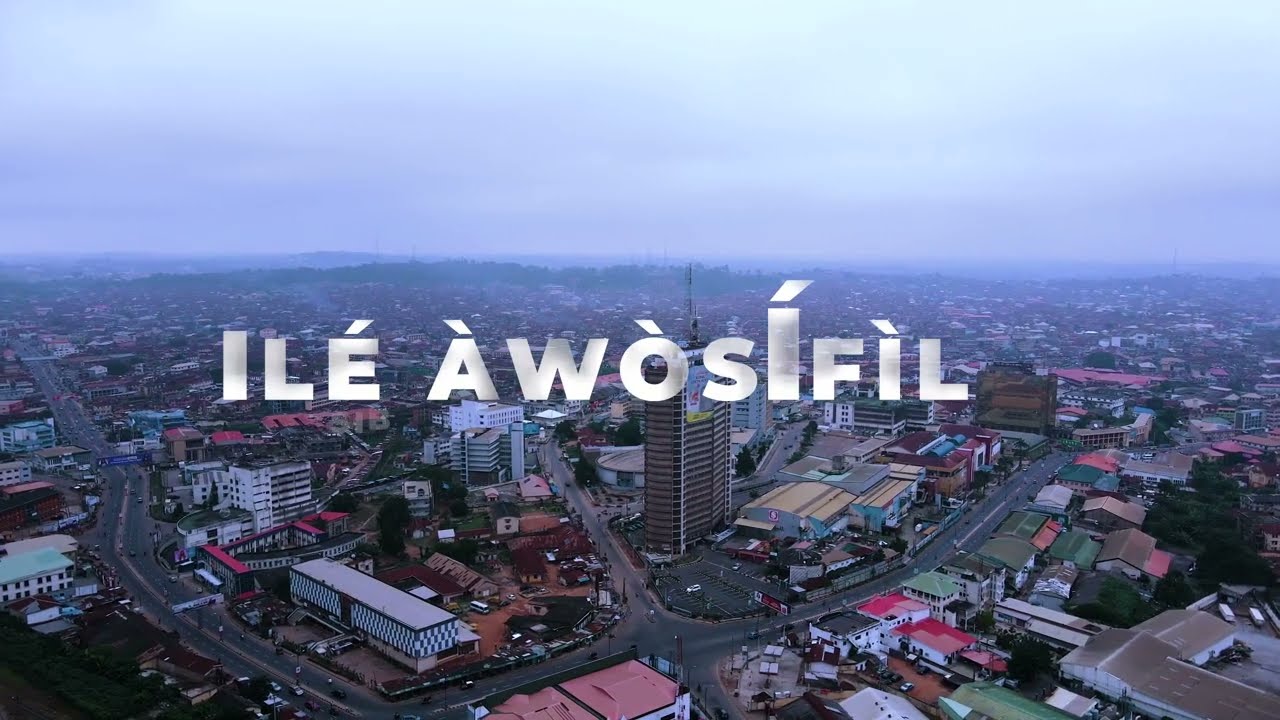
Cocoa House, Ibadan — the first skyscraper in West Africa — was turning 60. For OICL, the anniversary presented a recognition problem as much as a commemoration. The building existed in public memory as a landmark, but the ambition that produced it had become invisible. Six decades of economic and institutional history sat behind a façade that most people walked past without reading.
We made a documentary. But before we touched a camera, we asked the right question: who is this actually for, and what do we need them to feel when it is over?
The answer was not the usual anniversary audience — shareholders, alumni, dignitaries. It was millennials. People old enough to inherit a legacy but young enough to still be deciding what they think of it. We built the film around their questions, not the institution's answers. What did the men who built the first skyscraper in West Africa actually believe was possible? And does that belief have anything to say to the generation sitting in its shadow now?
That framing changed everything — the interviews we sought, the footage we built, the way the story moved.
A film that an institution could put in front of any audience — investors, partners, young professionals, government stakeholders — and have it do recognition work without feeling like a corporate video. ILÉ ÀWÒSÍFÌLÀ did not just mark sixty years. It made the case for why sixty years mattered, in language that landed with people who were not in the room when it was built.
The founding ambition of one of Nigeria's most significant institutions — made legible to the generation being asked to carry it forward.
The Ijebu Renaissance Group
Oba Sikiru Kayode Adetona has reigned for over six decades — one of the longest-serving monarchs in Yoruba history. The Ijebu Renaissance Group recognised that a reign of that significance was at risk of being remembered only in the ways that oral tradition remembers things: partially, unevenly, and subject to revision. They needed a documentary. But what they really needed was an archival instrument — something that would hold the record correctly, permanently, and in a form that could travel.
A biographical documentary is easy to get wrong. The instinct is to produce a celebration — and celebrations, however sincere, rarely survive the moment they were made for. We approached this differently.
The film was built on two tracks simultaneously. The first was the life — Oba Adetona's story told with the rigour of a historical document, not the warmth of a tribute. The second was the culture — Ijebu tradition as a living system of governance, identity and value, documented through the lens of one man who has stewarded it longer than most of his subjects have been alive.
That double track is what separates a film from an archive. We were not just recording what happened. We were building a reference — something a scholar, a successor, a diplomat, or a young Ijebu professional could return to and find something useful.
A documentary that functions as three things at once: a biographical record of one of Nigeria's most consequential traditional rulers, a cultural archive of Ijebu tradition and governance, and a masterclass in what long-term institutional leadership actually looks like in practice.
A six-decade reign and a rich cultural tradition — documented with the rigour they deserved, in a form built to outlast the moment.
Broadcasting Corporation of Oyo State / Oyo State Government
A new governor arrives with a clear mandate — change how Oyo State is perceived. Senator Abiola Ajimobi's administration understood something that many incoming governments miss: perception does not reset automatically with a regime change. It has to be actively managed. BCOS, the state-owned media network, was one of the first institutions handed that brief.
Its existing identity had not been updated in decades. In a state trying to reintroduce itself to regional, national, and international audiences, the broadcaster's logo was a passive presence — neither announcing the change nor helping audiences read what was different about this administration.
The brief was deceptively simple: create a logo that can sit alongside international broadcasters without explanation. No asterisk. No context required.
A logo for a state broadcaster has to carry two things at once — modern enough to hold the attention of a youthful population that has already moved to satellite and streaming, and stable enough not to alienate an older audience that grew up with the institution and associates it with legitimacy and continuity.
We designed a mark that made a clean break visually while holding enough institutional gravity to avoid feeling like a departure. The geometry was contemporary. The weight was considered. The result was a logo that communicated the same thing the governor was trying to communicate — that Oyo State had turned a page, without erasing what came before it.
A state institution's public identity — brought into alignment with the political moment it was meant to represent, without losing the authority it had spent decades building.
L’EKO Lagos Restaurant & Lounge, Ikeja
A new restaurant and lounge opening in Ikeja with an ambition that most Lagos hospitality briefs do not carry — to build something franchisable. Not just a good restaurant. A transferable experience. The proprietors wanted to own Lagos as a brand proposition, not just as a location. That means the identity cannot be tied to a specific street, a specific menu, or a specific moment in the city's culture. It has to carry Lagos as a feeling — one that travels to Accra, to Brooklyn, to Paris — and still arrive intact.
The name came first. L’EKO — a contraction built from the indigenous name for Lagos, older than the Portuguese word the city eventually inherited. In Yoruba, L’EKO means In Lagos — placement as identity. The apostrophe signals that a guest in Accra or Brooklyn is not approximating Lagos. They are being placed inside it. The name alone did positioning work before a single design decision was made. Worth noting: in French, the same contraction reads as a definite article — L’EKO becomes The Lagos experience, the origin that all locations branch from. It was not the intention. But it registers internationally, and it adds a layer the brand can wear without explanation.
The identity system was built to transfer. The central mark — the Eyo masquerade, the Spirit of Lagos — gave the brand its symbolic anchor. The Eyo is specific enough to mean something and abstract enough to travel. It does not explain Lagos to someone who knows it. It does not require explanation for someone who does not.
The text-based logo — L’EKO — was designed to read clearly at every scale and in every context. Together, the mark and the wordmark created a system that proprietors, investors, and managers could build into without the identity becoming a constraint.
A hospitality concept with global ambition — given an identity precise enough to mean something and flexible enough to go anywhere.
Folake Coker / Tiffany Amber
Tiffany Amber is one of Nigeria's most enduring fashion houses — three decades of work that has moved between Lagos runways and international editorial without losing its identity. When Folake Coker decided to create a sister brand inspired by her daughters, the brief carried a specific tension that most brand extensions do not survive cleanly: how do you build something new enough to stand alone, without stepping away so far that it loses the authority of where it came from?
TAN — Tiffany Amber Nigeria — was the answer to that question. But the answer needed a visual language to carry it.
The design problem was precise. TAN had to read as a departure from the parent brand — younger, more retail, more immediate — while remaining in the same conversation. Put it next to Tiffany Amber and it should feel related. Put it next to any other brand in an editorial and it should hold its own.
The solution was negative space. Black on white. A mark built from what was removed rather than what was added — clean enough for a label, considered enough for a billboard, quiet enough to sit beside international brands and hold its own.
The daughters as muses gave the brand its emotional logic. The design gave it the visual grammar to operate in the spaces that logic implied — retail, editorial, brand collateral, international fashion contexts where a new name has roughly one moment to register as belonging.
A daughter brand with its own identity and its own room — built to carry the equity of what came before it without being defined by it.
Tell us what you're working on. We'll tell you where we can help.
Last updated: July 2026
AfricaFeatures Co. ("AFCo", "we", "our", "us") is a Recognition and Opportunity Advisory Practice. We help founders, businesses, institutions, and place-based initiatives identify and close the gap between their actual value and the opportunities available to them — through Partner Studio, Frontline Diagnostics, and the Presence OS™ platform currently in development.
Our website is africafeatures.co.
We collect information you provide directly to us, including:
We do not collect payment information directly. We do not use tracking cookies or third-party analytics tools on this site.
We use the information collected to:
We do not sell, rent, or share your personal information with third parties for marketing purposes.
Information collected during Frontline Diagnostics and Partner Studio engagements — including observations, assessments, and strategic materials — is treated as strictly confidential. This information is used solely for the purpose of delivering your engagement and is not shared with any third party without your explicit written consent.
Engagement data is retained for the duration of the engagement and a reasonable period thereafter for quality assurance purposes, unless you request earlier deletion.
If you join the Presence OS™ waitlist, your email address and organisation information are stored and used solely to notify you when early access opens. You may request removal from the waitlist at any time by contacting us at the address below.
If you subscribe to AFCo Insights, your email address is stored and used solely to deliver insight updates. You may unsubscribe at any time by contacting us. We do not share subscriber lists with third parties.
All information submitted via this website is stored securely. We take reasonable technical and organisational measures to protect your information against unauthorised access, loss, or disclosure. Data is retained only as long as necessary for the purpose for which it was collected.
You have the right to request access to the personal information we hold about you, to request correction of inaccurate information, and to request deletion of your information where we have no lawful basis for retaining it. To exercise any of these rights, contact us directly.
This website does not use cookies for tracking or analytics. No cookie consent banner is required.
This website contains links to external services including WhatsApp. We are not responsible for the privacy practices of those services. We encourage you to review their privacy policies before sharing personal information.
We may update this Privacy Policy as our services evolve. The date of the most recent update is shown at the top of this page. Continued use of the website after any update constitutes acceptance of the revised policy.
For any privacy-related queries or to exercise your rights, contact AfricaFeatures Co. at:
info@africafeatures.co